

Can Humans Get Lice From Chickens
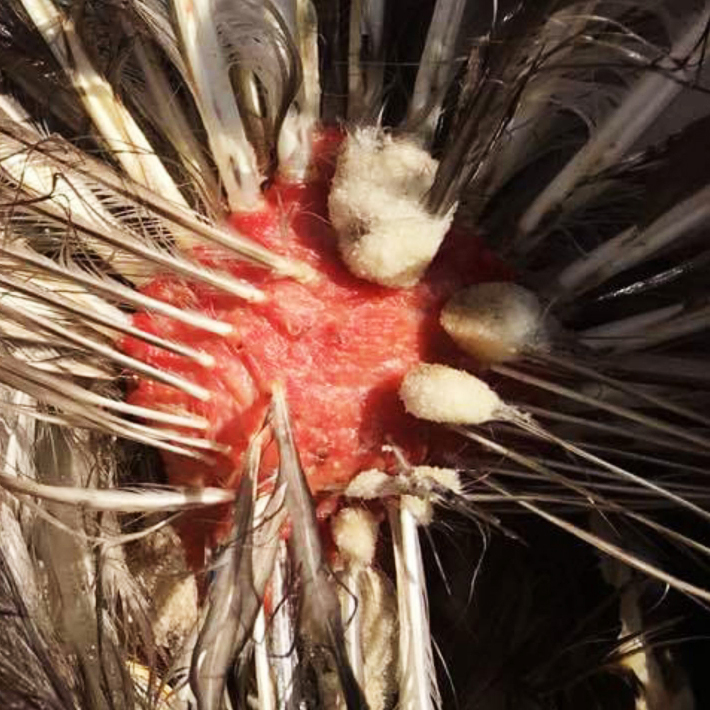
The most common means chickens acquire lice are from wild birds and other chickens. One time a chicken is infested, lice spread by crawling from one bird to another. Contact with infested feathers, especially during a molt, also helps spread lice.
Lousiness is usually worse in fall and winter. Suspect lice if your chickens are restless, constantly scratching and picking their own bodies. An infested bird can get so stressed it won't swallow or sleep well. Excessive preening results in feather damage. Egg production will drib, and so may fertility. A serious infestation can crusade death, particularly in immature chickens.
Where Lice Live
Each louse lives for several months, going through its unabridged life bicycle on a chicken's body. A louse tin't survive more than about a week off the trunk. The female person louse lays her eggs, called nits, on a chicken's feathers and makes sure they stay at that place by sticking them downward with glue.
Nits hatch in 4 to seven days. In about a month the new lice are mature enough to start laying nits. They go through one generation in about 3 weeks. In merely a few months 1 pair explodes into thousands, so yous can come across how quickly a chicken can become overrun with lice.
Each louse species has a preference for feeding on a different part of a chicken's body, resulting in descriptive names such as fly louse, head louse, and fluff louse. Nearly lice eat feathers, dried skin, and other organic matter on the peel.
Head Lice
The head louse is the near serious louse pest of immature birds, specially in such heavily-feathered breeds as Polish and Cochin. Females lay one egg at a time, gluing information technology to a feather on the top or back of the head, under the beak, and sometimes on the cervix. Caput lice spread from a hen to her chicks, causing the little ones to become droopy and weak. Seriously infested chicks may die.
Trunk Lice
The body louse is the most common one that bothers mature chickens. It lives on the peel of less densely feathered areas of the body, such as effectually the vent and under the wings. Signs include numerous scabs on the bird'southward pare and pearl-colored egg masses at the base of small feathers, typically nigh the vent. Body lice motion fast — when you part a chicken's feathers, take a quick expect earlier the lice scurry into hiding.
Getting Rid of Lice
Inspect your chickens at to the lowest degree one time a month, especially during fall and wintertime. Most lice that bear on chickens are yellow or straw colored. Look for moving lice on feathers and skin, and for white or grayish egg clusters at the base of feathers. If you run into lice on one bird, chances are good the unabridged flock has them, or soon will.
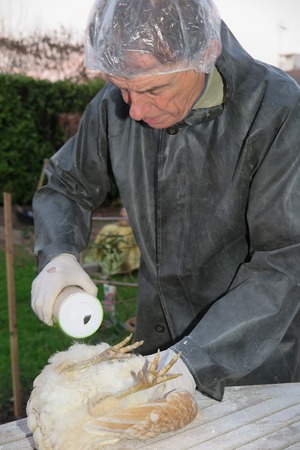
Many products are bachelor for treating chickens with lice, some more than toxic than others. One product, promoted as being all-natural, is Manna Pro Poultry Protector. Its active ingredient is potassium sorbate, a blazon of salt used as a preservative in a wide variety of foods including pickles, bakery appurtenances, and canned vegetables. Inert ingredients are water, yeast, and citric acid.
Poultry Protector is sprayed direct on affected birds, with care to avoid getting whatsoever into their eyes. Separate the feathers and thoroughly glaze the pare effectually the vent, nether the wings, behind the head, and forth the chest. To grab lice that hatch after the first spraying, echo in one week. Yous don't demand to spray the coop, since lice cannot live long off the chicken's body. But yous might want to spray roosts to discourage lice from traveling along them from one chicken to another.
Preventing Lice
Louse infections often back-trail poor direction and are associated with such problems as malnourishment, internal parasites, and a variety of other infections. Whether louse infestation causes these bug, or these other problems make chickens more susceptible to lice, is arguable. But the fact remains that poor nutrition, infection, worms, and lice are all undesirable.
Along with good nutrition and proper health intendance, the best style to avoid lice is to forbid their introduction in the first identify. The post-obit measures are helpful:
- Discourage wild birds from nesting in the coop.
- Help your chickens proceed themselves clean past providing opportunities for dust bathing.
- During the annual molt, rake up and dispose of accumulating feathers in the coop and chiliad.
- Treat newly-purchased infested chickens before housing them with an existing flock.
And that'southward today's news from the Cackle Coop.
Gail Damerow, author, The Chicken Wellness Handbook

Can Humans Get Lice From Chickens,
Source: https://www.cacklehatchery.com/how-do-chickens-get-lice/
Posted by: tracyappot1978.blogspot.com
0 Response to "Can Humans Get Lice From Chickens"
Post a Comment